
How Causation Is Evaluated in Legionnaires’ Disease Litigation Cases
Scientific analysis of causation in Legionnaires’ disease litigation. Exposure pathway evaluation, outbreak investigation review, environmental testing interpretation, and expert consulting for attorneys.
How Causation Is Evaluated in Legionnaires’ Disease Cases
One of the most significant scientific issues in Legionnaires’ disease litigation is determining whether a particular building water system was the likely source of exposure. Attorneys handling these cases frequently encounter complex questions involving environmental testing, epidemiology, exposure pathways, and outbreak investigation findings.
Unlike many environmental claims, Legionella-related cases often involve multiple potential exposure sources, changing environmental conditions, and limitations associated with retrospective investigation. As a result, evaluating causation in Legionnaires’ disease cases typically requires integration of scientific, environmental, engineering, and epidemiological evidence.
For attorneys evaluating Legionella-related claims, understanding how causation is assessed can be critical when determining whether available evidence supports a plausible exposure theory.

Understanding Causation in Legionnaires’ Disease Litigation
In Legionella litigation, causation generally involves evaluating whether a particular environmental source was capable of exposing an individual to aerosolized Legionella bacteria and whether the available evidence supports that source as the likely cause of illness.
This process often involves analysis of:
- Building water systems
- Exposure pathways
- Environmental testing data
- Epidemiological evidence
- Timing of illness and exposure
- Alternative exposure sources
Because Legionella bacteria may exist in multiple water systems and environmental conditions may change over time, causation analysis is rarely based on a single factor.

Why Causation in Legionella Cases Is Scientifically Complex
Legionnaires’ disease investigations frequently involve scientific uncertainty and technical challenges that complicate source attribution. Several factors contribute to this complexity.
Multiple Potential Exposure Sources
Individuals may encounter aerosolized water from numerous locations during the incubation period, including hotels, healthcare facilities, workplaces, residential buildings, and public spaces.
Environmental Variability
Conditions within water systems may fluctuate due to temperature changes, water usage patterns, disinfectant levels, stagnation, and maintenance activities.
Delays Between Exposure and Investigation
Environmental sampling may occur days or weeks after the alleged exposure event. Conditions present during testing may differ significantly from conditions present at the time exposure allegedly occurred.
Limitations of Environmental Testing
Positive environmental testing does not automatically establish causation, while negative testing does not necessarily eliminate a system as a potential source. Because of these variables, evaluating causation often requires multidisciplinary analysis rather than reliance on a single laboratory result.
Exposure Pathway Analysis in Legionella Cases
Exposure pathway analysis is often a central component of causation evaluation.
This process involves assessing whether conditions existed that could plausibly allow aerosolized Legionella bacteria to reach an individual.
Exposure pathway analysis may consider:
- Cooling tower operation
- Domestic hot water systems
- Decorative fountains and water features
- Aerosol-generating devices
- Plumbing system conditions
- Building occupancy and movement patterns
Scientific consultants may evaluate whether environmental conditions and building systems were capable of generating and dispersing contaminated aerosols.
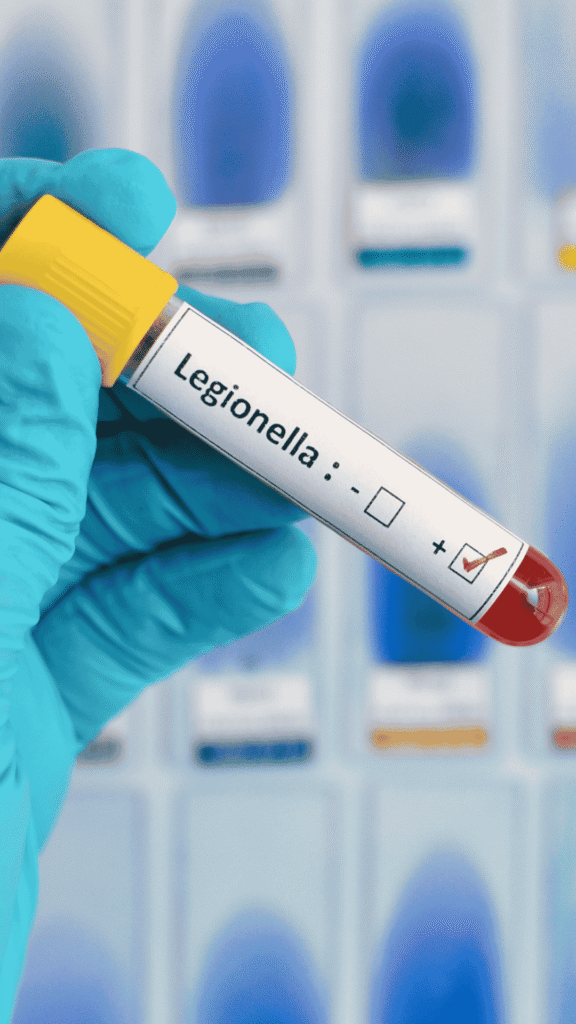
Environmental Testing and Causation
Environmental testing may provide important information during legionella outbreak investigations and litigation. However, interpretation of testing results requires careful scientific evaluation.
Positive Environmental Findings
The detection of Legionella bacteria within a water system indicates that bacteria were present at the time of sampling. However, positive findings alone do not necessarily establish that the system caused a particular illness.
Scientific interpretation may require consideration of:
● Sampling methodology
● Timing of sample collection
● Location of positive findings
● Concentration levels
● Exposure opportunities
Negative Environmental Findings
Negative environmental testing does not necessarily establish that Legionella bacteria were absent at an earlier point in time. Environmental conditions may change over time, and testing only evaluates selected locations within a system.
PCR vs Culture Testing
PCR testing detects genetic material associated with Legionella bacteria, while culture testing attempts to grow viable organisms. Both methods have strengths and limitations that may affect how findings are interpreted during causation analysis.
Epidemiological Evidence and Source Attribution
Epidemiological analysis may play an important role in evaluating causation during Legionnaires’ disease investigations.
Investigators may review:
- Travel histories
- Building occupancy records
- Timing of symptoms
- Potential common exposure locations
- Clusters of illness
Epidemiological findings may help identify buildings or systems warranting further environmental investigation.
Scientific consultants may evaluate whether epidemiological conclusions align with environmental and engineering evidence.

Water Management Practices and Causation Analysis
Building water management practices may also be relevant when evaluating Legionella-related claims.
Factors that may be considered include:
- Water temperature control
- Disinfectant management
- System maintenance procedures
- Flushing practices
- Biofilm control
- Corrective actions following prior issues
Review of water management practices may help determine whether environmental conditions existed that could support Legionella growth within a building system.
Alternative Exposure Sources
One of the most important aspects of Legionella causation analysis involves evaluating whether alternative exposure sources may exist.
Individuals may have visited multiple locations during the incubation period, including:
- Hotels
- Healthcare facilities
- Workplaces
- Residential buildings
- Public venues
Scientific review may involve determining whether other plausible exposure opportunities should be considered during causation analysis.

Scientific Consulting for Attorneys Evaluating Causation
Attorneys handling Legionnaires’ disease litigation may require scientific consulting to evaluate the strengths and limitations of available evidence.
Scientific consulting may assist with:
- Exposure pathway analysis
- Review of outbreak investigations
- Environmental testing interpretation
- Evaluation of building water systems
- Assessment of epidemiological findings
- Review of water management practices
Early scientific consultation may help attorneys understand technical issues relevant to case evaluation and litigation strategy.
Causation Analysis in Litigation and Insurance Matters
Causation questions are frequently central to litigation involving:
- Premises liability
- Healthcare-associated infections
- Commercial building exposure claims
- Hospitality-related outbreaks
- Insurance disputes involving environmental exposure
Scientific analysis may assist attorneys and insurers in evaluating whether available evidence supports a plausible connection between a particular building system and alleged illness.
Common Scientific Questions in Legionella Causation Cases
Attorneys and insurers may seek scientific guidance regarding questions such as:
- Does environmental testing support the alleged exposure source?
- Could multiple exposure sources exist?
- Are outbreak investigation conclusions scientifically reliable?
- Were building conditions capable of supporting Legionella growth?
- Do epidemiological findings align with environmental evidence?
These issues often require multidisciplinary scientific evaluation involving environmental science, microbiology, engineering, and epidemiology.

Frequently Asked Questions
Does finding Legionella bacteria prove a building caused an illness?
Not necessarily. Positive environmental findings indicate the presence of Legionella bacteria within the sampled system, but additional evidence is often required to establish causation.
Why is Legionella causation difficult to evaluate?
Legionella cases frequently involve multiple potential exposure sources, changing environmental conditions, and limitations associated with retrospective environmental testing.
What is exposure pathway analysis?
Exposure pathway analysis involves evaluating whether environmental conditions and building systems could plausibly have generated aerosolized Legionella bacteria capable of causing exposure.
Why do attorneys consult scientific experts in Legionella cases?
Scientific consultants may assist attorneys in interpreting environmental evidence, evaluating outbreak investigations, assessing exposure pathways, and reviewing causation issues.
Can negative environmental testing rule out exposure?
Not necessarily. Environmental conditions may change over time, and testing only evaluates selected locations within a system at the time of collection.
Consultation for Attorneys and Insurance Professionals
Attorneys, insurers, healthcare facilities, and commercial property owners may request scientific consultation regarding Legionella causation analysis and environmental evidence.
Consultation services may include:
Consultation services may include:
Consultation services may include:
● Confidential case evaluation
● Exposure pathway analysis
● Environmental testing interpretation
● Outbreak investigation review
● Water system evaluation
● Expert witness consultation
Organizations and legal teams seeking scientific insight regarding Legionella causation issues may request confidential consultation to discuss the specific circumstances of a case.
