

A Joint Mission to Ensure Healthier Indoor Environments
In an enlightening episode of the Exposure Scientist Podcast, Dr. Alex LeBeau welcomes Kayla McGowan, Editor-in-Chief of Restoration and Remediation (R&R) Magazine, for a conversation that underscores the importance of interdisciplinary collaboration in managing indoor environmental hazards. Dr. LeBeau, representing the industrial hygiene and exposure science side, and Kayla, representing the restoration and remediation field, explore how these two industries can better work together to create healthier and safer environments. Their dialogue highlights real-world challenges, shared goals, and the vital need for improved communication and mutual respect among professionals in these fields.
The Overlap Between Industrial Hygiene and Indoor Remediation
Though often viewed as distinct disciplines, industrial hygiene and Indoor remediation are deeply interconnected. Industrial hygienists specialize in identifying and evaluating exposure risks, ranging from chemical hazards to biological agents, while remediation professionals execute the physical removal or containment of those risks. The success of either role is heavily dependent on collaboration.
Kayla emphasizes:
"You cannot have restoration without cleaning, and you can't have cleaning without restoration."
She points out that issues like mold, fire, smoke, water damage, and even pet accidents all require a joint response. Industrial hygienists diagnose the invisible threats, while remediators clean and rebuild the spaces. These aren’t isolated tasks; they form a cycle of identification, mitigation, and restoration that ensures spaces are not only structurally sound but also safe and healthy for occupants.
Importantly, the broader public often doesn’t realize how these roles interconnect. For example, remediators are frequently mistaken as simple cleaners, while hygienists may be seen as consultants working behind the scenes. This misconception underscores the importance of educating consumers, and each other, about each party’s role in achieving a shared goal.
Understanding Indoor Hazards and Health Impacts
The Health Impact of Poor Indoor Environments
Contaminated indoor spaces can significantly impact health and quality of life. Whether caused by mold, water damage, pet waste, or smoke, long-term exposure to indoor pollutants can lead to respiratory issues, neurological symptoms, allergic reactions, and chronic conditions. Kayla notes:
"If your space is not healthy, there's gonna be constant sickness. You're not gonna feel good."
This reinforces the urgency of timely and comprehensive remediation. Sometimes the visible damage, like a burst pipe or soot-covered walls, is only a fraction of the actual problem. What lies beneath, such as mold in drywall, bacteria in HVAC systems, or residual contaminants in the air, may pose more serious threats. The joint effort of industrial hygienists and remediators ensures that such threats are properly diagnosed, contained, and eliminated.
Kayla also stresses the importance of recognizing delayed health effects:
"Health can be immediate, but it can also be lasting. You can also cross-contaminate, and most people don't talk about that."
That’s why working together, from initial assessment to final clearance, is critical to effective remediation.
Communication and Collaboration in Practice
The Importance of Unified Strategies
A central theme of the discussion is the need for robust communication between professionals. Too often, conflict arises when each party assumes their method is superior or when there's a lack of shared understanding. Kayla and Dr. LeBeau both emphasize that the best outcomes come from mutual respect and compromise.
"We all have our specialty. We're all experts in our own space, but what we do on a regular basis involves multiple professions."
Healthy debates can lead to better solutions, provided they’re rooted in data, professional standards, and the specific context of the situation. The ideal is a team-oriented approach where everyone’s expertise is respected and integrated into the decision-making process.
Dr. LeBeau adds:
"Egos will get the best of us. I’ve seen consultants have that Superman syndrome. That’s not a great way to serve clients."
Understanding the Consumer’s Perspective with Indoor Remediation

From the consumer’s point of view, navigating a loss, whether from water, mold, or fire, is incredibly stressful. Kayla, speaking from her own experience with water loss, notes that most people don't know whom to call or what to expect:
"The immediate thing is either Google. You don’t really call your insurance company."
That’s why preparedness and transparency are essential. Professionals must be ready not just to do the work, but to explain what’s happening, how long it will take, who is involved, and what the expected outcomes are. Even better, if one party can serve as the main point of contact while coordinating with others behind the scenes, it streamlines the experience for the client and builds trust.
Environmental and Logistical Considerations
Tailoring Solutions to the Environment
Indoor Remediation needs vary based on environmental conditions. For example, mold may grow quickly in humid regions like Florida but not as rapidly in arid areas like Nevada. Water from different sources, sewage, freshwater, and saltwater, also requires unique remediation approaches. Kayla explains:
"It goes so much further than what you can see with your eye."
That environmental variability is another reason why collaboration is crucial. Local contractors might have firsthand knowledge of regional issues, while industrial hygienists bring the scientific rigor needed to assess unseen risks. Together, they create customized remediation plans tailored to the space, conditions, and health concerns involved.
Serving Both Residential and Commercial Spaces
Although much of the discussion revolves around homes, Dr. LeBeau reminds listeners that commercial and industrial spaces face similar, if not greater, challenges. Businesses may not be able to shut down for extended periods, so professionals must find innovative ways to restore the space with minimal disruption.
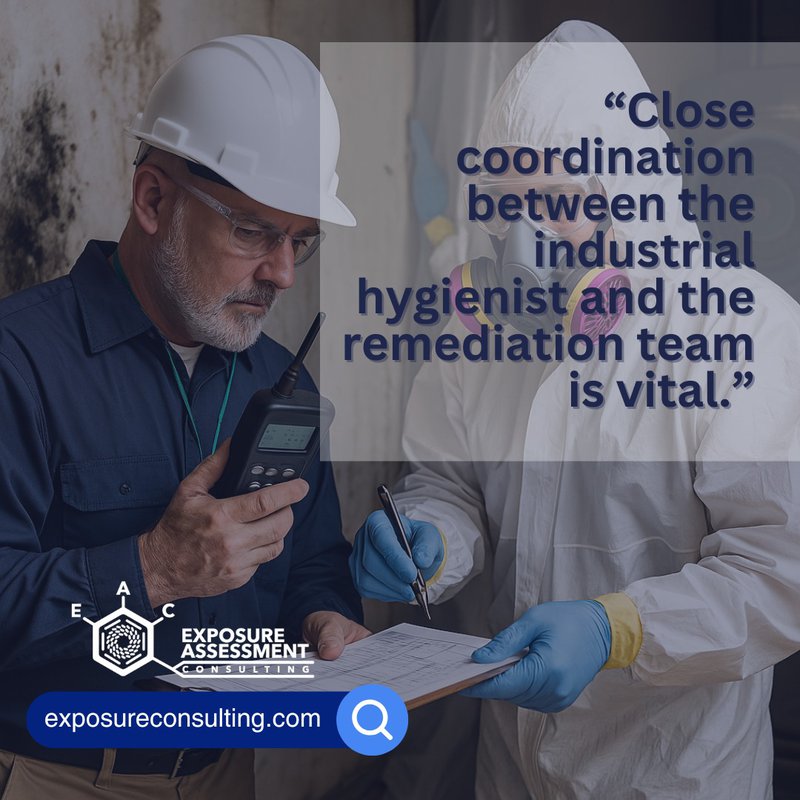
This might involve working in shifts, isolating certain areas, or implementing phased remediation plans. Close coordination between the industrial hygienist and the remediation team is vital. The goal is to safeguard health while supporting operational continuity, an intricate balance requiring teamwork and creative problem-solving.
Navigating Insurance, Regulations, and Public Perception
Insurance and Budget Constraints
Dealing with insurance can be one of the most difficult aspects of remediation work. Claims adjusters, budgets, and third-party oversight can delay or restrict the process. Dr. LeBeau and Kayla agree that presenting a united, well-documented case is the most effective way to gain insurer support.
"We need to present the whys, the science behind it, the data behind it."
Miscommunication or conflicting reports can lead to claims being denied or delayed. Having a single point of contact for insurance discussions can simplify the process and avoid mixed messages.
Adapting to Regulatory and Legislative Changes
As more states adopt regulations around mold, indoor air quality, and environmental health, restoration professionals must stay informed and agile. Sometimes laws are vague or outdated. Professionals need to advocate for science-based policies and offer insights from real-world experience.

"If we ever stop pushing for evolution in our practices, we’re doing a disservice to those we serve."
In states like Florida, licensure for mold professionals is a positive step. Other states may follow suit, increasing the need for cross-disciplinary training and policy engagement.
Elevating Industry Awareness and Reputation
Many consumers are unaware of what restoration professionals or industrial hygienists do until disaster strikes. Kayla highlights the need for community engagement, transparent practices, and good customer service:
"We’re changing people’s lives one person, one family at a time."
Word of mouth and reputation matter. When professionals work well together, they provide a smoother experience for the client, and that builds trust and brand recognition.
A Shared Commitment to Safe, Healthy Spaces
Dr. LeBeau and Kayla McGowan’s conversation ultimately circles back to a shared mission: to restore safety, health, and normalcy for people in some of their most vulnerable moments. Whether dealing with mold, water, or fire damage, the collaboration between industrial hygienists and remediation professionals is not a luxury, it’s a necessity.

"We all have something to bring. And even if you don’t know the answer, defer to someone who does—that’s collaboration."
By bridging gaps, improving communication, and remaining open to new methods and partnerships, these professionals ensure that their work is not just technically sound but deeply impactful. Their efforts transform disrupted spaces into safe havens and help clients regain peace of mind, one project, one home, and one life at a time.
