

In today's rapidly evolving world, environmental concerns have become a focal point for industries, governments, and individuals alike. The demand for accurate environmental laboratory sample analysis has never been higher. The need for reliable data to ensure regulatory compliance, public health, and environmental protection grows. However, as crucial as these analyses are; they come with their own set of challenges, particularly in terms of communication between environmental professionals and analytical laboratories.
To shed light on this topic; we delve into a detailed discussion with Mark Alessandroni, a seasoned expert with over 30 years of experience in the field. Mark is the principal consultant for the Mark Hay Consulting Group, a company he founded in 2011. His extensive career has seen him wear many hats. These are including that of a research chemist, consulting chemist, professional environmental engineer, and even an environmental laboratory owner and technical director. His vast experience offers a unique perspective on the intricacies of environmental laboratory sample analysis, and the communication challenges that often arise.
The Complex World of Environmental Laboratory Sample Analysis

Environmental laboratory sample analysis is a complex process that involves collecting and analyzing samples from various environmental matrices, such as air, water, soil, and biological tissues. These samples are often analyzed to demonstrate regulatory compliance with standards set by bodies like the Department of Environmental Protection (DEP), and the NELAC Institute (TNI). The goal is to ensure that the data generated is of known and verifiable quality. This can be used to make critical decisions regarding environmental safety and public health.
However, as Mark points out, the assumptions made by those collecting or submitting samples for analysis often differ from the assumptions made by those working in the lab. This discrepancy can lead to misunderstandings and errors, highlighting the need for clear communication between all parties involved. For example, the environmental laboratory might assume that the sample submitted for analysis is free of interferences, while the field personnel might not have considered the potential impact of those interferences on the analytical results.
Mark emphasizes the importance of understanding the different types of samples analyzed in environmental laboratories and the challenges that come with them. For instance, a laboratory might analyze drinking water samples, groundwater, surface water, or even hazardous waste. Each of these matrices requires different analytical methods and instruments, and the levels of contaminants expected can vary significantly. This variability can complicate the analysis, particularly when dealing with samples that contain very low levels of contaminants. This is often the case with drinking water samples.
The Importance of Accreditation and Consistency
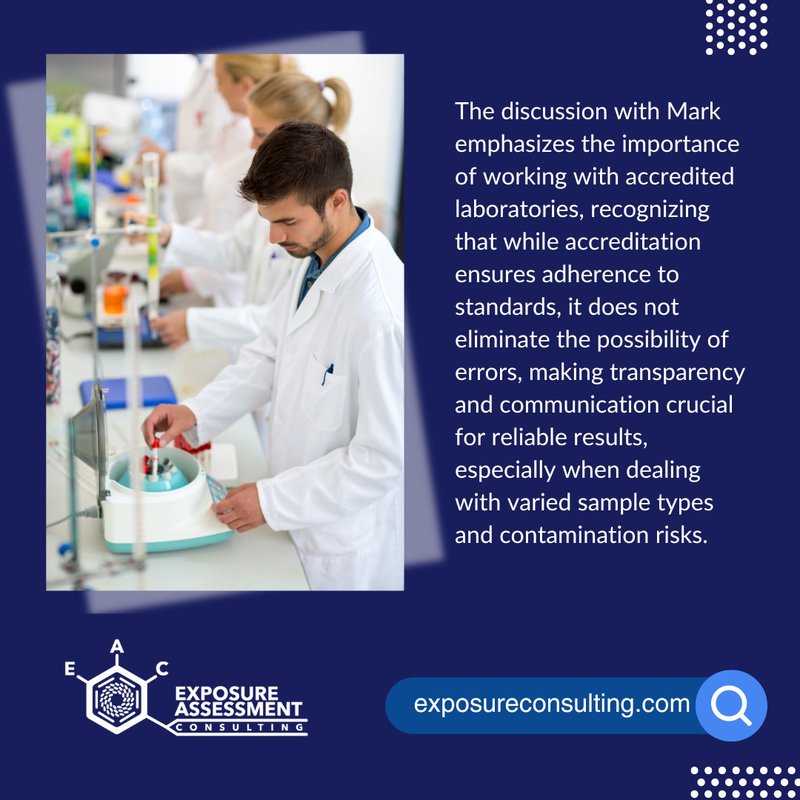
One of the key takeaways from our discussion with Mark is the importance of working with accredited laboratories. In Florida, for example, any analytical results submitted to the DEP for regulatory purposes must come from a laboratory accredited by the NELAC Institute. Accreditation ensures that laboratories follow documented procedures and take necessary steps to address any deficiencies in their processes.
However, Mark cautions that accreditation alone does not guarantee perfection. Even accredited laboratories can make mistakes, and it's crucial to distinguish between honest errors and nefarious actions. Laboratories are complex environments, and the challenges they face, from sample reception to analysis, are numerous. Therefore, establishing a relationship with a laboratory that values transparency and open communication is essential for ensuring the reliability of the results.
Mark also highlights the potential challenges when working with laboratories that have a broad scope of capabilities. For instance, a laboratory might analyze both drinking water samples and hazardous waste samples. The level of contaminants in these samples can differ vastly, and laboratories must be adept at managing these differences to avoid cross-contamination and ensure accurate results.
The Role of Communication in Ensuring Accurate Results

One of the most critical aspects of environmental laboratory sample analysis is the communication between the laboratory and the client. Mark emphasizes that clear and transparent communication is vital for ensuring that the results generated by the laboratory are accurate, reproducible, and meaningful. Without proper communication, laboratories may not fully understand the client's needs. As a consequence, this leads to results that do not meet the client's expectations.
If a client needs to determine whether a sample meets a regulatory standard, such as a drinking water standard of one part per billion for a contaminant like benzene, it is crucial that the laboratory understands this requirement. Therefore, if the laboratory reports a result of less than ten parts per billion, this information is not sufficient for the client to determine compliance with the one part per billion standard. Furthermore, it is essential for clients to communicate their specific needs to the laboratory and for laboratories to ask the right questions to ensure they fully understand those needs.
Mark also discusses the importance of establishing a relationship with the laboratory staff, particularly those at the bench level who are directly involved in the analysis. While it may be challenging to communicate directly with bench-level staff, doing so can provide valuable insights into the analytical process and help identify potential issues early on.
Challenges Faced by Environmental Laboratories

Environmental laboratories face numerous challenges, both internally and externally. Internally, laboratories must manage the complexities of sample analysis, including the limitations of their instruments and the variability of the samples they receive. Externally, laboratories must navigate the pressures of pricing, competition, and the need to maintain accreditation.
Mark explains that the most significant challenge for commercial environmental laboratories is the constant pressure to do more with less. As pricing pressures increase, laboratories are forced to find ways to maintain their operations while delivering high-quality results. This often means relying on automation and robotics to increase efficiency and reduce the potential for human error.
However, Mark cautions that while automation can improve efficiency, it cannot replace the expertise and judgment of experienced laboratory personnel. The most critical instrument in any laboratory is still its people, who bring the knowledge and understanding necessary to ensure that the results generated are accurate and meaningful.
The Future of Environmental Laboratory Sample Analysis
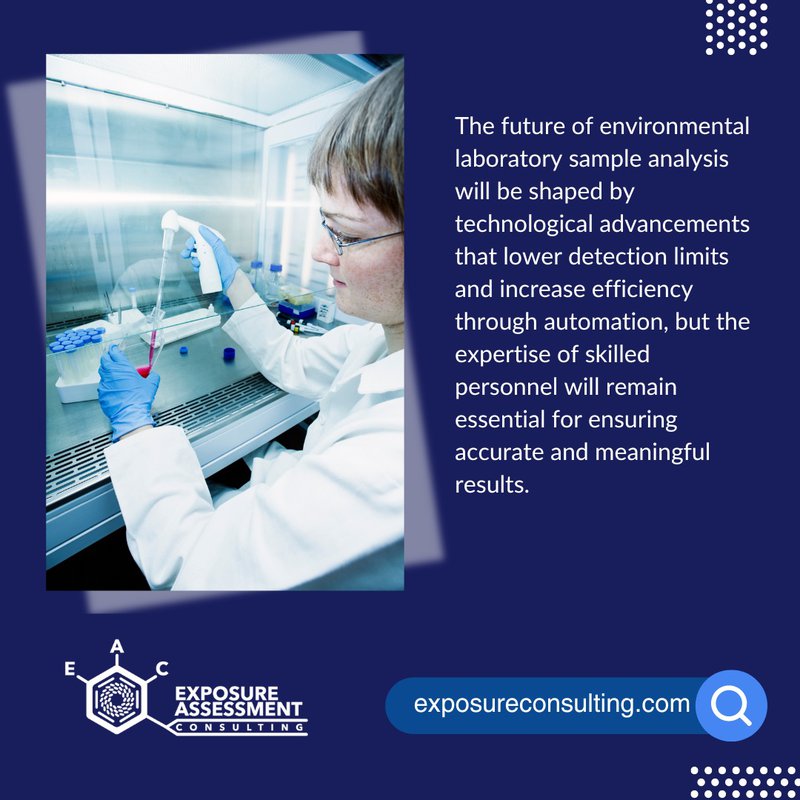
Looking to the future; Mark anticipates continued advancements in technology that will drive detection limits, and lower and improve the accuracy of environmental laboratory sample analysis. As new contaminants, such as PFAS (per- and polyfluoroalkyl substances), become the focus of regulatory scrutiny. Laboratories will need to develop new methods and technologies to detect these substances at increasingly lower levels.
Additionally, the role of automation and robotics in laboratories is expected to grow. This will further increase efficiency and allowing laboratories to analyze more samples in less time. As Mark points out, these advancements will not eliminate the need for skilled personnel who can interpret the data and ensure that the results are reliable.
In conclusion, environmental laboratory sample analysis is a critical component of ensuring regulatory compliance, public health, and environmental protection. However, the process is fraught with challenges, particularly in terms of communication between laboratories and clients. By establishing clear lines of communication, working with accredited laboratories, and staying abreast of technological advancements, environmental professionals can ensure that the data they rely on is accurate, reproducible, and meaningful. Mark’s insights have shown, the key to successful environmental laboratory sample analysis lies in understanding the complexities of the process and fostering a collaborative relationship between all parties involved.
