

The PFAS Problem in Popular Products
Chemicals in the Spotlight
In a recent episode of The Exposure Scientist Podcast, Dr. Alex LeBeau discusses the growing public and regulatory concern surrounding PFAS (per- and polyfluoroalkyl substances) in consumer products, specifically referencing the media attention around their presence in Apple Watch bands. These so-called "forever chemicals" are being flagged across industries for their environmental persistence and potential health effects. However, as Dr. LeBeau points out, the leap from detection to risk is neither scientifically simple nor ethically trivial.
With lawsuits being filed and public concern rising, exposure scientists are once again called to step into a highly visible, highly technical role. For Dr. LeBeau, this moment underscores a fundamental truth in exposure science: finding a chemical is not the same as quantifying its risk.
Legal and Public Scrutiny Regarding PFAS in Consumer Products
As PFAS attract growing attention from plaintiffs’ attorneys and investigative journalists, there is an increasing demand for scientifically defensible exposure assessments. Regulatory landscapes may lag, but public opinion rarely does. The risk for manufacturers is no longer limited to compliance failure—it now includes reputational harm triggered by premature or misinterpreted data.
From Detection to Relevance: The Missing Links
Misalignment of Methods and Exposure Pathways
The growing presence of PFAS in headlines often reflects genuine concern, but not always scientific clarity. When studies or media reports announce that PFAS have been "found" in a consumer product, Dr. LeBeau urges a critical question: what is the exposure context?
To illustrate, he examines a recent study that gained traction in both scientific and mainstream publications. While the study reported PFAS in certain watch bands, a deeper look revealed that the testing method referenced was designed for food contact surfaces. That method, developed for assessing leachability in containers where PFAS might migrate into food, has limited application in wearable devices like wristbands.
Aggressiveness of Extraction and Biological Relevance
This raises a serious concern about relevance. If the method is not designed to simulate the dermal environment—specifically, human sweat and skin contact—it may be overly aggressive in extracting substances that would not be released under normal use conditions. "The methodology used matters," Dr. LeBeau explains, "especially when the data is being used to imply harm."
Scientific Rigor in Exposure Assessment

Aligning Routes of Exposure
Dr. LeBeau emphasizes the importance of aligning analytical methods with the actual route of exposure. When a product is worn against the skin for long durations, the relevant questions involve dermal absorption, bioavailability, and systemic exposure. Using ingestion-based standards to evaluate skin exposure is not only inaccurate, it is scientifically irresponsible.
Hazard Versus Risk
He stresses the need to differentiate between hazard and risk. The presence of a potentially hazardous substance does not confirm a public health threat unless it is bioavailable at harmful concentrations. Without this connection, the finding remains an observation, not a health risk.
This is where exposure science must operate with discipline. Risk is contextual. It requires an understanding of dose, duration, route, and susceptibility. "Hazard identification is not the same as risk characterization," LeBeau reminds his audience. "Just because something can cause harm doesn’t mean it will."
Interpreting Studies Beyond the Headlines
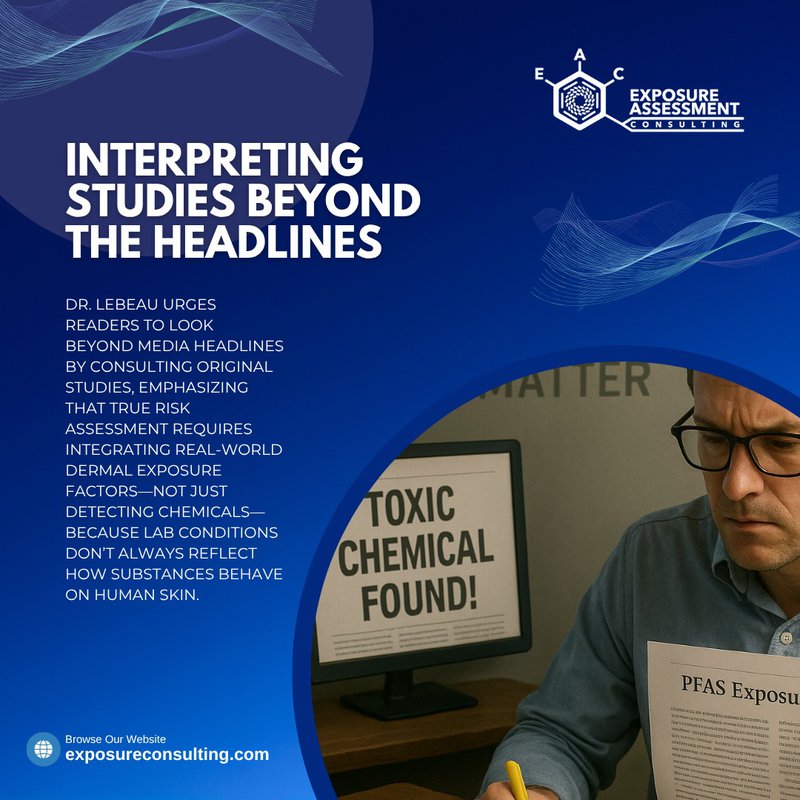
Primary Sources and Scientific Integrity
The media often simplifies or overstates the findings of scientific studies. Dr. LeBeau encourages readers and professionals alike to retrieve the original research whenever possible. In this case, the referenced PFAS study—published in Environmental Science & Technology Letters—cites methodologies that are themselves sourced from FDA food contact guidance.
Bridging Analytical and Biological Evidence
This is not inherently flawed, but it highlights the need for deeper scrutiny. Dermal exposure is governed by different parameters, such as surface area contact, skin integrity, sweat pH, and absorption kinetics. Without integrating those variables into the assessment, risk cannot be determined.
Dr. LeBeau points out that while research may highlight the presence of a chemical, it often fails to bridge the gap between analytical chemistry and human toxicology. "Real-world use conditions matter," he says. "If a chemical is extracted in a lab using solvents or high-energy processes, it doesn’t necessarily mean it would migrate under sweat and skin contact."
Implications for Manufacturers and Assessors
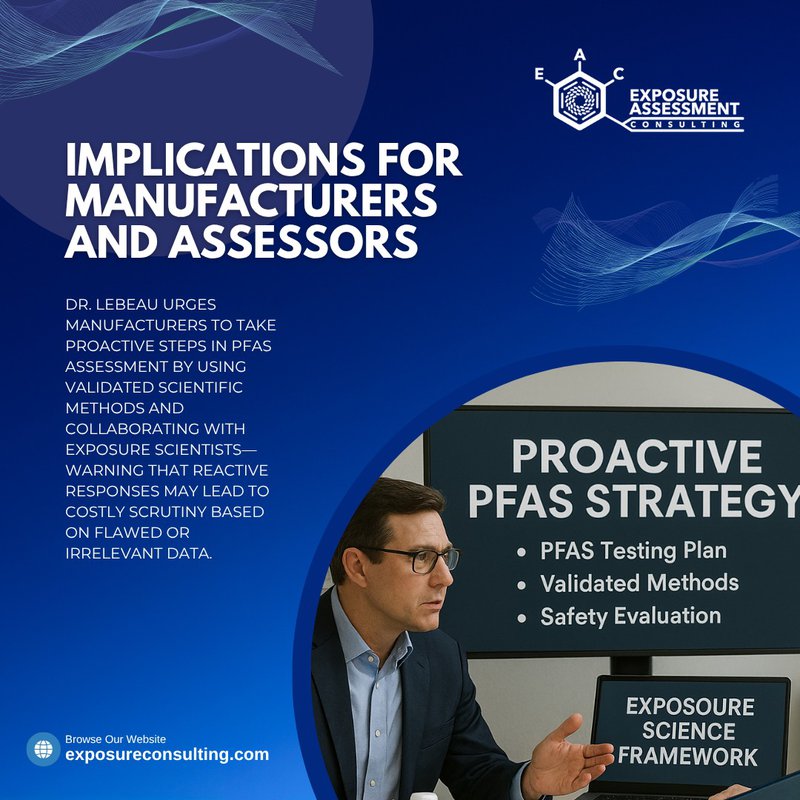
Early Action and Scientific Collaboration
This episode serves as a cautionary message for manufacturers and product safety assessors. As regulatory scrutiny of PFAS intensifies, the margin for error narrows. Brands must not only avoid the presence of these compounds, but also be prepared to defend their safety through scientifically robust assessments.
Dr. LeBeau advises his clients to evaluate their products using accepted exposure science frameworks, including validated laboratory methods and transparent safety evaluations. Some manufacturers, he notes, already incorporate PFAS screening into biocompatibility testing and consumer product safety plans. Others, however, remain unaware of the burden they may soon face.
The Cost of Reactive Response
Those who wait until a journalist or regulator initiates testing risk finding themselves behind the curve. Worse, they may be subjected to scrutiny based on data that lacks relevance or scientific merit.
Dr. LeBeau offers a clear recommendation: anticipate scrutiny, implement industry-accepted testing early, and collaborate with exposure scientists who understand the nuances of toxicological risk, not just analytical detection.
The Broader Responsibility of Exposure Scientists
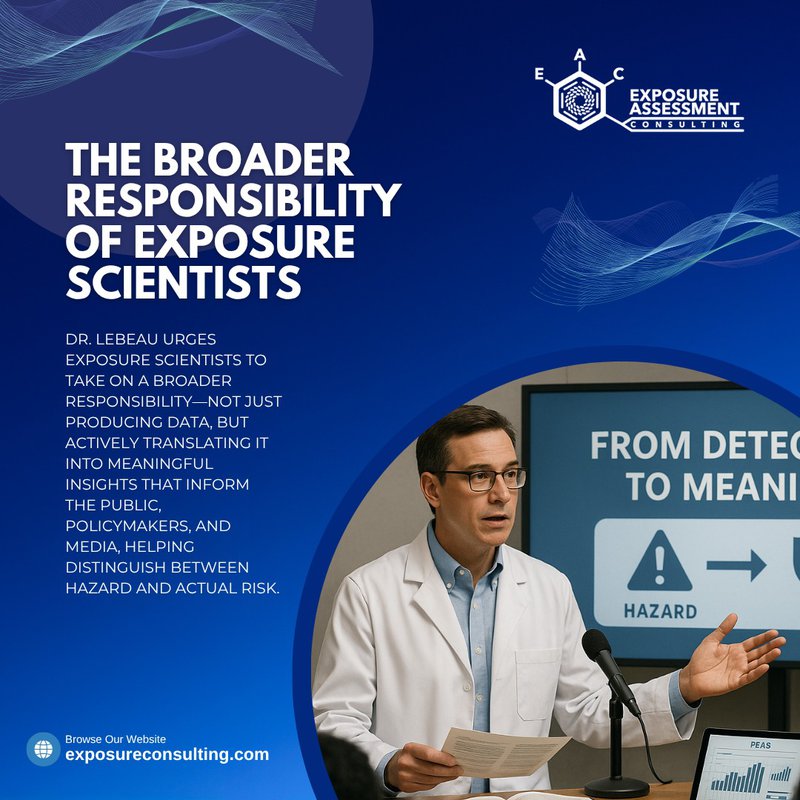
Communicating Science Responsibly
At the core of this episode is a call to action for scientists working in toxicology, product safety, and environmental health. As public concern over PFAS and other contaminants grows, it is vital for experts to help interpret findings accurately and responsibly.
Exposure science is not just about generating data. It is about contextualizing it, translating it, and ultimately protecting people by using the best available methods to assess real risk.
A Call to Engage and Educate
Dr. LeBeau ends the episode by encouraging listeners to engage with primary research, challenge interpretations that leap from hazard to harm, and offer their expertise to journalists and policymakers seeking clarity.
"This is what we do," he says. "We help bridge the gap between detection and meaning, between science and decision-making."
[Horizontal Rule]
To speak with an exposure scientist about PFAS risk in your product or facility, contact:
🌐 www.exposureconsulting.com
📩 info@exposureconsulting.com
