

Exposure Preparedness and the Evolving Nature of Disaster
Disasters do not simply disrupt daily life. They fundamentally alter conditions of exposure, introducing new hazards, intensifying old ones, and challenging the controls we rely on. In a recent episode of The Exposure Scientist Podcast, Dr. Alex LeBeau, principal scientist at Exposure Consulting, shared a compelling reflection on Hurricanes Milton and Helene. These storms, which hit North Carolina and Florida hard, became a lens through which to explore a more urgent question: how do we prepare for what we cannot fully predict?
Speaking not only as a scientist but also as a community member, Dr. LeBeau emphasized that exposure professionals must stretch beyond risk models and engage with real-world unpredictability. The call to anticipate and control exposures must now extend into our homes, businesses, and communication systems.
The Industrial Hygiene Mantra in a Climate-Challenged World
Anticipation is More Than Forecasting
The core philosophy of industrial hygiene is simple: anticipate, recognize, evaluate, and control. Yet, Dr. LeBeau suggests that this framework must evolve. “We tend to plan for what we’ve already seen,” he says. “But hurricanes like Helene collapse timelines and introduce hazards that don’t fit into clean categories.”
For LeBeau, anticipation is not about reacting to a weather report. It involves considering cascading effects: communication loss, infrastructure collapse, and waterborne contamination. In other words, anticipation must account for how quickly hazards can multiply.
When Preparedness Becomes Practice

Personal Measures Reflect Scientific Insight
During the episode, Dr. LeBeau speaks openly about changes he made in his own household following recent events in Florida. “I bought a solar-powered generator. I began keeping an extra supply of medicine. I now have a go-bag. These weren’t panic purchases. They were decisions rooted in science.”
He treats preparedness as a form of exposure control. For scientists and consultants in this field, such actions are not anecdotal. They reflect a professional commitment to resilience. What may seem like personal safety practices are, in reality, an extension of risk assessment applied in a domestic context.
Domestic Readiness as Exposure Strategy
From waterproof containers for documents to maintaining duplicate sets of eyeglasses, Dr. LeBeau urges others in the field to stop separating “work protocols” from “home preparedness.” Exposure science must become a lifestyle for those who practice it. He adds, “What I do at home mirrors what I advise to clients. The same framework applies.”
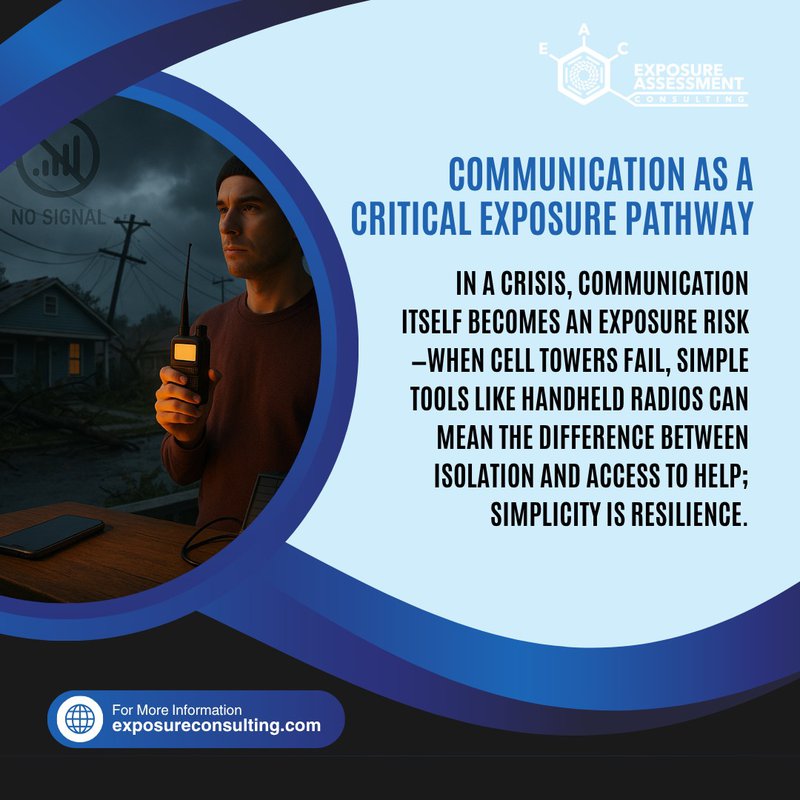
Communication as a Critical Exposure Pathway
Infrastructure Failures Create Secondary Hazards
A recurring theme in the episode is the vulnerability of communication systems. “Entire areas had no cell service. People were trapped without a way to call for help,” Dr. LeBeau explains. In those scenarios, exposure is not only physical or chemical. It is also the inability to access assistance or guidance.
Radios as an Overlooked but Essential Tool
LeBeau highlights the role of amateur radio during the crisis. “Handheld radios became the primary form of communication. Not smartphones, not social media, just radios.” Following the storm, he pursued and obtained his own ham radio license. These radios, some of which cost as little as twenty dollars, can be powered by portable batteries and used when cellular infrastructure is unavailable.
He recommends avoiding devices with proprietary chargers and choosing radios with standard USB-C inputs. “In an emergency, you should not be managing five types of cables. Simplify, because simplicity is resilience.”
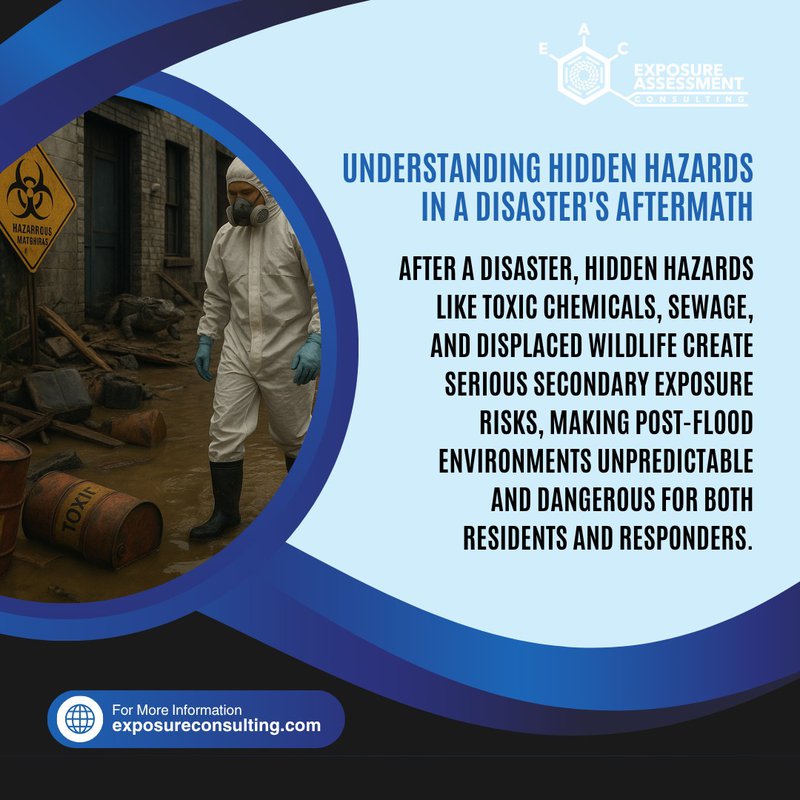
Understanding Hidden Hazards in a Disaster's Aftermath
Chemical and Biological Exposure After Flooding
When the waters recede, the second phase of exposure begins. Dr. LeBeau warns against underestimating the complex risk profile of floodwaters. “These waters don’t just bring mud. They carry sewage, industrial waste, and dislodged chemicals from brownfields or old industrial sites.”
He references news reports of the Environmental Protection Agency detecting unexpected contaminants in post-hurricane samples. These are not rare occurrences. When groundwater shifts, buried chemicals may be transported across neighborhoods. Facilities near storm impact zones must be re-evaluated for safety before re-entry.
Wildlife and Biological Intrusions
Beyond chemical threats, disaster zones often experience a rise in unexpected biological risks. LeBeau recounts an incident where an eight-foot alligator was found inside a post office in Sanibel, Florida. “Floods can bring snakes, rodents, even large predators into buildings. The environment becomes unpredictable.”
This introduces additional risks for cleanup crews, maintenance teams, and emergency responders. “Exposure doesn’t just mean what’s in the air. It includes what’s hiding in the debris, under the waterline, or behind a broken wall.”
Business Resilience Is Exposure Resilience
Building a Plan that Survives the Crisis
Dr. LeBeau challenges not only individuals but also business owners to think more strategically. “What happens to your employees? What happens to your supply chain, your inventory, or your sensitive materials?”
He encourages organizations to develop written emergency plans using state-level hurricane guides as templates. These plans should cover communication alternatives, off-site backups, evacuation procedures, and chain-of-custody preservation for sensitive environments.
Revisions Are a Scientific Imperative
He offers a reminder: “Write the plan, walk away for a day or two, then come back and revise. A static plan does not reflect the evolving nature of risk.” Just as exposure assessments are dynamic, emergency protocols must be living documents.
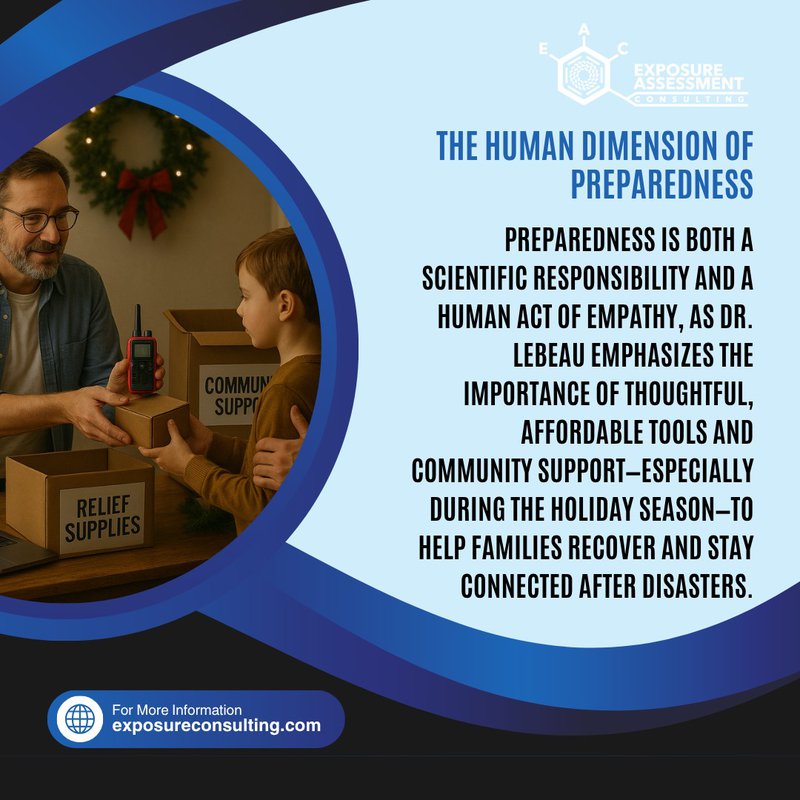
The Human Dimension of Preparedness
Science, Empathy, and Seasonal Giving
As the holiday season approaches, Exposure Consulting is supporting communities affected by the hurricanes. LeBeau shares that his team will offer vetted links to disaster relief organizations on their website. They also plan to match donations and provide targeted support to families in need.
“Some of these families have lost everything,” he says. “Even the children have very little left. This is the time to respond not only as scientists, but as neighbors.”
Small Tools, Big Impact
Holding up a basic two-way radio during the episode, Dr. LeBeau emphasizes that a twenty-dollar device can make the difference between isolation and survival. “Preparedness doesn’t need to be expensive. It needs to be thoughtful. Choose tools that work. Plan as if it matters—because it does.”
Exposure Science as an Ongoing Commitment
This episode is not just a reaction to a storm. It is a call to align our personal habits, institutional strategies, and professional standards with the lived realities of environmental risk. As Dr. LeBeau reminds us, “Preparedness is not paranoia. It is a responsible application of science. And it is always evolving.”
For scientific consultation, resources on exposure preparedness, or vetted donation links, visit:
🌐 www.exposureconsulting.com
📩 info@exposureconsulting.com
